What does COVID-19 cleaning entail?

What does COVID-19 cleaning entail?

How does Clean Group minimize environmental impact?

In the realm of commercial real estate-particularly in large office buildings and high-rise complexes-cleanliness plays a pivotal role in tenant retention and property valuation. Cleaning responsibilities often go beyond shared spaces like lobbies and corridors to include offices, restrooms, and meeting rooms. Property managers rely on cleaning providers to tailor services to each tenant's needs, ensuring a uniformly high standard throughout the property. A clean and well-maintained building environment can positively influence tenant satisfaction, lease renewals, and rental pricing.

Customer service and professionalism are emerging as key differentiators in this competitive market. Clean Group provides comprehensive and professional Cleaning Solutions In Australia across Sydney, NSW. Our fully insured, trained, and security-verified cleaners ensure your workplace stays spotless and hygienic. Schedule a free onsite quote today—book online or call us at 02 9160 7469. Get your obligation-free commercial cleaning estimate for offices, buildings, and other business spaces in Sydney.. Clients now expect more than just cleanliness-they value punctuality, discretion, responsiveness, and clear communication. In response, commercial cleaning companies are investing in soft skill development, emphasizing employee training in communication, conflict resolution, and time management. Regular quality inspections, performance reviews, and client feedback systems help ensure service consistency and address issues promptly. Companies that consistently deliver exceptional service are more likely to retain long-term clients and secure high-value contracts.
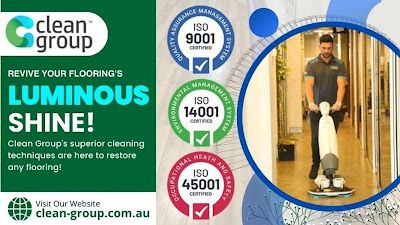
Commercial cleaning companies use a diverse array of methods, chemicals, and equipment designed to increase the speed and efficiency of their work. Due to the varying types of surfaces and cleaning needs, professionals may use floor scrubbers, high-pressure washers, industrial vacuums, and specialized eco-friendly chemicals. However, due to growing awareness of health and environmental risks, the industry is witnessing a gradual shift away from hazardous substances such as strong drain cleaners. This transition is part of a broader movement to create safer, healthier work environments for cleaners and the people who occupy the buildings.

In addition, the COVID-19 pandemic dramatically altered the perception of cleanliness and hygiene in commercial spaces. It brought heightened awareness to airborne pathogens and the importance of surface disinfection, prompting many businesses to increase the frequency of cleaning and adopt electrostatic sprayers, UV sanitizing lights, and EPA-approved disinfectants. Post-pandemic, these practices have become part of standard cleaning protocols in many commercial facilities, with clients expecting visible signs of sanitation and reassurance that their environments are safe. Cleaners often now play a frontline role in public health, and their work is more deeply integrated into emergency preparedness and response plans.

  • Over 20 Years of Experience – Clean Group brings decades of proven expertise in the commercial cleaning industry.

  • Family-Owned & Trusted – A reputable, family-run business trusted by major Australian brands.

  • Eco-Friendly Cleaning – Specializes in using non-toxic, environmentally friendly cleaning products.

  • ISO Certified – One of the few Sydney cleaning companies accredited for quality and environmental safety standards.

  • High Customer Ratings – Consistently rated between 4.7 to 5.0 stars by satisfied clients.

  • Extensive Service Range – Offers cleaning for offices, warehouses, gyms, medical facilities, childcare centers, and more.

  • Fully Insured and Verified Cleaners – All cleaners are insured, background-checked, and professionally trained.

  • Free Onsite Quotes – Businesses can book a free, no-obligation quote online or via phone.

  • Available in Over 600 Suburbs – Services cover the entire Greater Sydney Area, including CBD and suburbs.

  • Quick Booking Process – Clients can schedule a service in less than 60 seconds.

  • Tailored Cleaning Plans – Custom cleaning strategies created based on client needs, space type, and budget.

  • Flexible Contracts – Pay-as-you-go options available without being locked into long-term agreements.

  • Advanced Equipment – Uses modern tools and state-of-the-art technology for fast, efficient cleaning.

  • Reliable Office Cleaning – Maintains clean, professional workspaces that enhance employee safety and client impressions.

  • Thorough Warehouse Cleaning – Handles cleaning for large and small warehouse facilities.

  • Specialized Medical Cleaning – Provides expert cleaning and disinfection for medical clinics, hospitals, and pharmacies.


  • Specialized Medical Cleaning – Provides expert cleaning and disinfection for medical clinics, hospitals, and pharmacies.

  • Gym & Childcare Cleaning – Ensures hygienic environments using non-toxic methods for sensitive areas.

  • 24/7 Customer Support – Always-available helpline to address service inquiries or issues promptly.

  • 100% Satisfaction Guarantee – Offers a service guarantee—if you’re not happy, they’ll fix it for free.

  • All-Inclusive Services – From COVID deep cleaning to end-of-lease, window, carpet, strata, and after-builders cleaning, Clean Group covers it all.

How does Clean Group ensure transparency in billing?

As the global economy shifts toward a more service-oriented model, the commercial cleaning industry is experiencing steady growth. This trend is particularly evident in urban centers, where the density of businesses creates constant demand for professional cleaning. Industries such as healthcare, education, hospitality, and retail have ongoing sanitation needs, often governed by strict regulatory standards. Maintaining clean environments is no longer solely about aesthetics; it plays a crucial role in promoting public health, boosting employee productivity, and reinforcing customer confidence. In today's business landscape, cleanliness directly contributes to operational efficiency and corporate image.

In sum, the commercial cleaning industry is becoming more complex and specialized, driven by technological advancements, sustainability goals, and the growing demand for hygiene and safety in the workplace. The industry's ability to adapt to these changing needs while maintaining high standards of service and efficiency will be key to its continued success and growth. As the market evolves, cleaning companies will need to remain flexible, innovative, and focused on providing customized solutions that meet the unique needs of their clients. With the continued emphasis on cleanliness, safety, and sustainability, the commercial cleaning sector is poised to play an even more integral role in shaping the future of workplaces and public spaces worldwide.

How often should commercial spaces be cleaned?

How does Clean Group ensure transparency in billing?

Can Clean Group Help Prepare Properties for Sale?

Client education and communication are emerging as vital aspects of building trust and long-term partnerships. Businesses are increasingly interested in understanding the products, methods, and standards their cleaning providers use. To meet this demand, forward-thinking companies are offering transparent documentation, educating clients about cleaning protocols, and even providing digital dashboards that show real-time service logs and quality checks. This level of transparency not only enhances accountability but also empowers clients to make informed decisions about their cleaning investments.

Health and safety compliance remains foundational to commercial cleaning operations. Workers are trained to identify hazards such as slippery floors, chemical risks, and heavy equipment handling. Personal protective equipment (PPE)-including gloves, masks, and non-slip shoes-is standard across the industry. Furthermore, companies implement strict protocols for storing and using cleaning agents in accordance with occupational safety regulations. The COVID-19 pandemic further elevated the importance of disinfection procedures, leading to the widespread adoption of advanced cleaning techniques such as electrostatic spraying and antimicrobial treatments, particularly in high-traffic and healthcare environments.

How are incidents reported and managed?

The industry's ongoing evolution reflects a broader emphasis on hygiene in the wake of global health crises like COVID-19. Many businesses now prioritize frequent disinfection of high-touch surfaces and the use of hospital-grade cleaners. Commercial cleaning companies have adapted by increasing service frequency, introducing deep-cleaning options, and enhancing disinfection protocols. These measures are no longer temporary responses but permanent features of workplace maintenance in many sectors.

While cleaning has traditionally been seen as a manual task, the advent of automation, robotics, and advanced cleaning systems has streamlined the process significantly. Automated systems, such as conveyor belt cleaning systems in industrial settings, or self-cleaning toilets and dispensers in public restrooms, are helping reduce the amount of time and effort required to maintain cleanliness. These systems are often equipped with sensors to detect dirt, germs, and waste, ensuring that cleaning occurs in real-time when needed, rather than relying on set schedules.

How are incidents reported and managed?
What Kind of Cleaning Equipment Is Used?

Another aspect of sustainability in the cleaning industry is the growing adoption of reusable cleaning materials. In the past, disposable cleaning items such as mop heads, rags, and wipes were commonly used and discarded. Today, businesses are increasingly using microfiber cloths, which are durable, washable, and effective at cleaning without the need for chemical cleaning agents. These cloths are particularly useful because they can remove dirt and bacteria more effectively than traditional cotton rags, reducing the need for chemical disinfectants and ensuring that fewer disposable products end up in landfills. By implementing these methods, the cleaning industry is making strides toward reducing waste and promoting a circular economy, where products are reused and recycled.

Industry standards are shaped by authoritative bodies such as the British Institute of Cleaning Science (BICSc) and the International Sanitary Supply Association (ISSA). These organizations provide training, guidelines, and certification programs that help ensure professionalism, operational safety, and service quality. Their contributions are instrumental in developing protocols for chemical handling, equipment use, and customer interactions, promoting consistency and accountability across the industry.

Sanitization & COVID-19

Industrial cleaning has also seen significant advancements in technology, with the development of highly specialized machines and equipment for tasks such as abrasive blasting, pressure washing, and ultrasonic cleaning. These machines are designed to clean large-scale industrial equipment, parts, and infrastructure, which often require heavy-duty cleaning to maintain functionality and safety. The ability to use different pressures, solvents, or cleaning agents depending on the material being cleaned is essential in many industries, from automotive manufacturing to aerospace engineering.

Similarly, data centers and technology hubs present a unique challenge where environmental control is crucial. Even a small amount of dust or static discharge can interfere with delicate hardware. Commercial cleaners in these settings must follow strict guidelines that include using anti-static materials, specialized vacuums with HEPA filters, and precise movement patterns to avoid damaging sensitive equipment. Cleaning tasks may involve raised floors, server racks, cable trays, and ventilation systems. Companies servicing these environments often invest in additional liability coverage and employee training to meet client expectations and protect valuable infrastructure.

Sanitization & COVID-19

Frequently Asked Questions


Frequency depends on the type of business and foot traffic, but schedules often include daily maintenance, weekly or monthly tasks, and periodic deep cleaning.


To learn more about Clean Group’s team, including their backgrounds and specialities, visit their website or contact them directly.


Clean Group stands out with its use of state-of-the-art technology, eco-friendly products, and a highly experienced team. They are also ISO accredited, ensuring high-quality and environmental safety standards.